

697bccaf2f7f67.61240145_24x24.jpg "New In")


69ec00354f7a68.03349975_24x24.jpg "Sale")





























































































































































































































69ec00354f7a68.03349975_64x64.jpg "Sale")
697bccaf2f7f67.61240145_64x64.jpg "New In")


697bd159de92f4.62956165_64x64.jpg "Sex Toys")
697bd6ac3accd8.01871027_64x64.jpg "Bondage")
697bd97523c8b5.05473821_64x64.jpg "Essentials")
697bdb8a98b849.39624185_64x64.jpg "Lingerie")













6983ba7f989247.53577499_1200x0.jpg)
In UK search results, the two most common terms are "chastity belt" and "chastity cage." People often confuse them. Both involve locking, teasing, and giving up or taking control.
Here’s the simple version: a chastity belt is a system that covers and secures the genital area. A chastity cage, often called a penis cage, is a smaller device. It encloses the penis to limit erections and block direct stimulation. This guide explains what each one is, how they feel when wearing, hygiene and comfort tips, and how to choose the right option as a beginner.
Contents
Key takeaways
- Chastity belts provide more coverage for the waist, hips, and crotch. They can be designed for both men and women.
- Chastity cages (a.k.a. penis cage, sometimes called a “cock cage”) are smaller and often easier for daily wear.
- Both rely on a chastity lock (key system), but comfort and fit matter more than “maximum security”.
- If you’re new to male chastity, most people find a well-sized cage the simplest place to start.
- Good hygiene, sensible wear times, and consent-led rules are what make chastity play enjoyable — not pushing through discomfort.
Quick comparison: chastity belt vs chastity cage
| Feature | Chastity cage (penis cage) | Chastity belt |
|---|---|---|
| What it is | Base ring + cage that encloses the penis, secured with a lock | Waist/hip belt + front panel/strap system covering the genital area |
| Coverage | Compact, focused | Wider, more “all-over” coverage |
| Discretion | Often easier under clothing | Often bulkier, more noticeable |
| Cleaning | Usually simpler and quicker | More surfaces/straps = more attention needed |
| Common beginner choice | Yes (especially for male chastity cages) | Sometimes, if the wearer prefers belt-style restraint |
What is a chastity device?
A chastity device is a wearable restraint designed to limit sexual access and direct stimulation. In kink and BDSM play, chastity is often used for teasing, orgasm denial, keyholder play, and power exchange. But it can also be explored in a lighter, playful way between partners.
Modern chastity devices are made for consenting adults. They come in many designs, such as chastity cages and chastity belts. Other styles include straps and "panty" designs. Manufacturers usually make them from metal, silicone, or plastic/resin. Most devices include a lock-and-key setup (or a built-in chastity lock) that allows users to remove them only intentionally.
Note: You’ll sometimes hear medieval “history” stories about belts. Modern chastity wear is mostly about adult choice and erotic control. It focuses on relationship dynamics and fun for those interested in exploring, not on history or medicine.
Shop link: Browse chastity devices at Secrets Shop UK.
Chastity belts explained: design, use and types
A chastity belt is a belt-and-panel restraint that covers and secures the genital area. Most designs include a waistband (or hip belt) plus a front panel or strap system that sits through the crotch. Once fitted and locked, it restricts access and makes direct stimulation difficult (or impossible) depending on the design.
Who are chastity belts for?
Chastity belts can be worn by different bodies depending on the style. In search terms, you’ll see male chastity belt, chastity belt for men, and female chastity belt (also searched as ladies chastity belt). The key is choosing a belt designed for the wearer’s anatomy and comfort needs.
Common chastity belt styles
- Metal belts: A firmer, heavier feel and a strong “locked-in” psychological effect.
- Silicone or flexible belts: Softer against the skin, often easier to wear for shorter sessions.
- Strap-based belts: Adjustable and popular for kink play, but need careful fitting to avoid rubbing.
What belts are best at
- Coverage: Many people like the full “secured” sensation.
- Control dynamics: The belt can feel more symbolic and “serious” for some couples.
- Versatility: Belt designs exist for different bodies and preferences.
What belts can be trickier with
- Discretion: More bulk means it’s often harder to conceal under everyday clothing.
- Hygiene: More coverage means you need a reliable cleaning routine.
- Comfort over time: Straps and panels can rub if sizing is off or if you’re sitting/walking for long periods.
Shop link: Browse chastity belts at Secrets Shop UK.
What is a chastity cage?
A chastity cage is a small device for men. It covers the penis and stops erections and direct stimulation. It’s also commonly searched as a penis cage (and sometimes called a “cock cage” or “BDSM cage”).
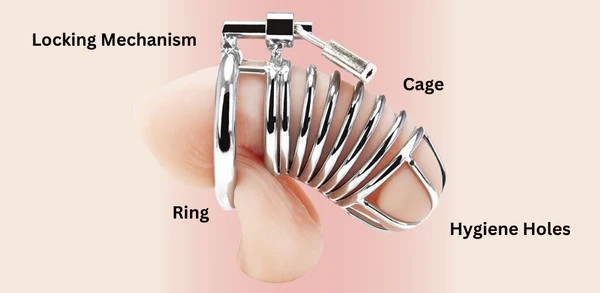
Most cages have three core parts:
- Base ring (chastity ring): Sits at the base, usually behind the testicles, helping the device stay in place.
- The cage: The section that covers the penis. It may be solid, ventilated, or open-design for easier cleaning.
- Locking point: A built-in lock or locking mechanism (your chastity lock) to secure the ring and cage together.
In everyday use, cages are popular because they’re smaller and often easier to wear discreetly. Many beginners exploring male chastity often choose a cage first. They then try different styles once they know what feels comfortable.
Popular chastity cage styles (useful if you’re browsing)
- Open design cages: More ventilation and easier hygiene.
- Flat chastity cage: Low-profile design for discretion under clothing.
- Inverted chastity cage: A style that sits differently on the body; some prefer the feel and containment.
- Short/tiny cages: Smaller cages designed for tighter containment (best once you understand sizing and comfort).
- Metal chastity device: A heavier, more rigid feel; fit must be accurate.
When you see terms like "male chastity cage" or "chastity cage device," they usually mean the same thing. Type of chastity device designed around male anatomy, built for restriction, teasing and keyholder control.
Shop link: Explore chastity cages at Secrets Shop UK.
Chastity belt vs chastity cage: key differences
Both devices restrict access and encourage teasing and denial. But they differ in how they sit on the body, what day-to-day wear feels like, and how much effort hygiene takes.
- Coverage: A chastity belt covers more area; a penis cage is compact and focused.
- Discretion: Cages are often easier under clothing; belts can be bulkier.
- Fit complexity: Cages rely on accurate ring + cage sizing; belts rely on waist/hip sizing and strap adjustment.
- Cleaning: Cages can be simpler; belts often need more attention to keep skin comfortable.
- Who they suit: Belts can suit different bodies (including female chastity belt styles). Cages are primarily for male anatomy (including male chastity cages).
Pros and cons: chastity belts vs cages
Chastity belts
Pros
- Wider coverage and a strong “secured” feeling
- Options for different bodies (including female chastity belt designs)
- Can suit couples who enjoy a more structured, ritual feel
Cons
- Often less discreet under clothing
- More contact points = higher chance of rubbing if the fit is off
- Cleaning takes more time and consistency
Chastity cages (penis cages)
Pros
- Compact and often easier for daily wear
- Usually easier to clean than full belt systems
- Popular starting point for male chastity beginners
Cons
- Fit matters a lot — wrong ring size can cause discomfort quickly
- Some styles can pinch or rub if worn too long too soon
- Heavier metal designs can feel intense if you’re new
How to choose: what beginners should consider
If you’re new to chastity, choose based on your lifestyle and comfort goals — not the most “hardcore” option.
- Goal: Discreet daily teasing? Start with a cage. Want fuller coverage? Consider a belt.
- Wear time: Planning long term wear? Prioritise breathable designs and easy hygiene access.
- Discretion: For wearing under everyday clothes, low-profile cages (including flat styles) often suit better.
- Material: Silicone can feel more forgiving; metal feels firmer and more structured.
- Locking style: Padlock, integrated lock, or numbered tag — pick what suits your dynamic and sexual activities.
- Hygiene routine: Be honest about what you’ll actually maintain day-to-day.
Sizing and fit tips (the part that makes or breaks chastity)
Most problems people blame on “chastity being uncomfortable” are actually fit issues. You want snug and secure — never tight, painful, or numb.
Chastity cage fit checklist
- Ring size: The base ring should sit securely without digging in. If anything feels cold, numb, or painful, stop and reassess.
- Cage length: Too long can rub; too short can feel cramped. Beginners often do better with a sensible, everyday length.
- Ventilation: Open designs can make cleaning easier, especially if you’re wearing for longer periods.
- Movement test: Walk, sit, bend and climb stairs at home for short sessions before committing to longer wear.
Chastity belt fit checklist
- Waist/hip sizing: Measure where the belt sits (waist or hips depending on design).
- Strap comfort: Check inner thigh and groin contact points for rubbing.
- Sitting comfort: Belts that feel fine standing can become uncomfortable when seated for an hour.
Safety, hygiene and comfort tips
Chastity should feel exciting, not punishing. Set rules that protect the wearer’s comfort and make hygiene a normal part of play.
- Start slow: Begin with short sessions, then increase wear time gradually.
- Clean little and often: A quick wash and dry routine helps prevent irritation.
- Use toy-safe products: A suitable cleaner helps maintain hygiene (and a gentle routine helps skin).
- Water-based lubricant: A small amount can help with application and reduce friction at contact points.
- Watch for warning signs: Pain, numbness, swelling, bruising, broken skin, or worsening redness means stop immediately.
- Consent and check-ins: Agree on boundaries, safe words/signals, and keep the key accessible in the early stages.
Helpful links: Water-based lube | How to clean sex toys | Sex toy cleaner
How to put on a chastity cage (and wear it comfortably)
This is the keyword people search for most because the first fitting is where confidence is built. Here’s the practical, beginner-friendly approach.
How to put on a chastity cage: step-by-step
- Start clean and dry: Hygiene first. Wash and dry the area and the device.
- Use a small amount of water-based lube: Apply lightly to help the ring sit comfortably and reduce friction.
- Fit the base ring (chastity ring): Position it securely as per the device instructions.
- Guide the cage into place: The cage should sit comfortably over the penis without pinching.
- Lock gently: Secure the device with the lock/pin system. It should feel snug, not restrictive.
- Do a movement check: Walk around, sit down, and adjust if anything rubs or pinches.
- Start with short wear: 20–60 minutes at home is a sensible first session. Increase gradually.
How to put on a chastity belt: quick notes
- Fit the waistband/hip belt first: It should sit securely without digging in.
- Adjust straps/panel gradually: Avoid overtightening — rubbing is the main issue for beginners.
- Test sitting and walking: Belts can feel different once you’re moving normally.
Buying a chastity cage in the UK (and what to look for)
If you’re shopping for a chastity cage UK buyers can wear comfortably, prioritise fit and finish over gimmicks. Smooth edges, good sizing options, and a design that is easy to clean are very important. This is especially true if you plan to wear it for a long time.
You’ll also see searches for chastity belt UK, chastity cages UK, and chastity device UK. A good UK retailer should make it easy to compare materials (silicone vs metal), understand sizing, and get discreet delivery.
Shop link: Browse chastity devices or explore chastity cages at Secrets Shop UK.
Frequently asked questions
Is a chastity cage the same as a penis cage?
Yes — in everyday use, penis cage is a common search term for a chastity cage. You may also see “male chastity cage” or “male chastity device”.
Can I pee whilst wearing a chastity cage or belt?
Many designs allow urination through openings, but it varies. Hygiene matters either way — rinse and dry regularly, especially during longer wear.
Is male chastity safe?
Male chastity can be safe when it’s consensual, correctly sized, and worn sensibly. Stop immediately if you feel pain, numbness, swelling, bruising, or skin irritation, and reassess the fit and wear time.
What’s the best choice for beginners: chastity belt or chastity cage?
Most beginners do better starting with a comfortable chastity cage because it’s compact and simpler to fit. A chastity belt can work too if the wearer prefers belt-style restraint, but it often requires more adjustment.
Do I need a metal chastity device?
A metal chastity device feels firmer and heavier, which some people enjoy. However, silicone or lighter designs can be easier to use while you learn about fit and comfort.
Can women wear chastity belts?
Yes, there are female chastity belt and ladies chastity belt designs created for the female anatomy. As with all chastity devices, the right fit and a sensible wear routine matter most.
Shop chastity devices at Secrets Shop UK
If you’re ready to explore, start with the option that matches your lifestyle: a compact cage for everyday teasing, or a belt if you prefer fuller coverage. Browse chastity devices at Secrets Shop UK for discreet UK delivery and a range of materials and styles.
Help other users with the choice - be the first to share your opinion about this post.